Why Your Skin Doesn’t Bounce Back Like It Used To
Understanding elastin, ageing, and the loss of skin elasticity
What is elastin?
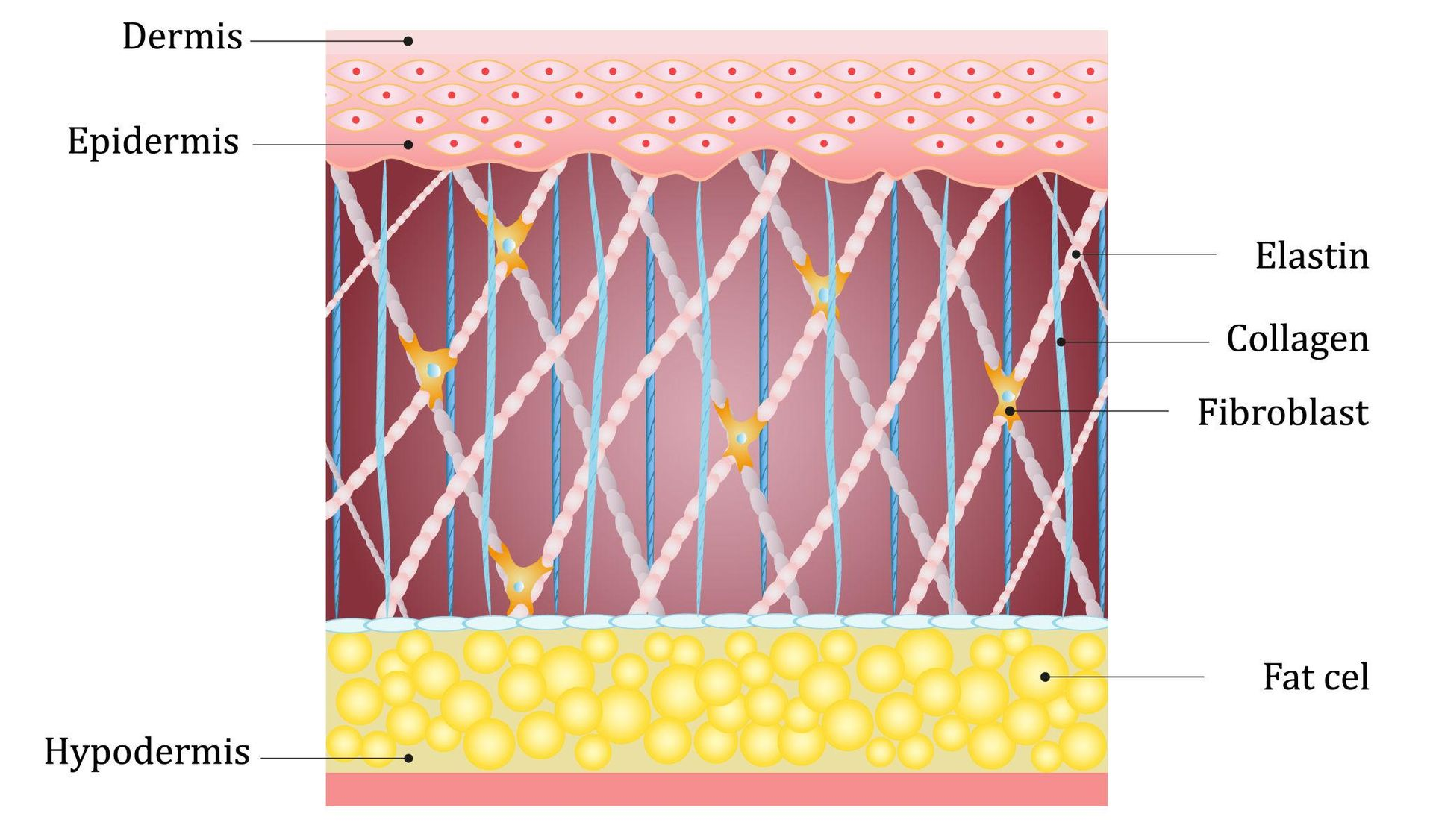
Elastin is a
protein in the dermis (the deeper layer of the skin) that allows skin to
stretch and recoil.
Think of it like a
rubber band woven through a strong net:
- Collagen = strength and structure
- Elastin = flexibility and snap-back
Together, they let your skin bend, smile, wrinkle, stretch — and then recover.
Without elastin, skin might still be strong, but it would behave more like stiff fabric than soft, responsive tissue.
What does elastin do in healthy skin?
In youthful, healthy skin, elastin fibres:
- allow skin to stretch without tearing
- help skin return to its original position after movement
- support smoothness and firmness
- work with collagen to maintain resilience
This is why young skin doesn’t just look firm — it moves well.
Why elastin is different from collagen
Here’s a key point many people don’t realise:
Elastin is mostly made early in life.
- The majority of elastin production happens in childhood and adolescence
- After that, the body produces very little new elastin
- What you have in adulthood is largely what you keep — or lose
Collagen can be remodelled and replenished over time.
Elastin? Much harder.
What happens to elastin as we age?
Ageing affects elastin in three main ways:
1. Elastin fibres break down
Sun exposure, inflammation, and oxidative stress gradually
damage elastin fibres.
Once damaged, they don’t regenerate easily.
2. Elastin becomes disorganised
Instead of neat, functional fibres, ageing skin develops fragmented or tangled elastin, which doesn’t work properly.
3. Skin loses recoil
Skin may still stretch, but it doesn’t snap back the way it used to — leading to:
- laxity and sagging
- crepey texture
- slower recovery after facial movement
This is why skin can look thin or loose even when collagen levels aren’t severely depleted.
Elastin and sun damage: a major relationship
UV exposure is one of the biggest enemies of elastin.
Chronic sun exposure leads to solar elastosis, where:
- normal elastin is replaced with abnormal, thickened elastin material
- skin becomes leathery, less elastic, and less functional
- elasticity is lost even if the skin looks “full”
This is why sun-damaged skin often feels looser but thicker, not firm.
Elastin’s role in “crepey” skin
That fine, crinkled texture often described as “crepey” isn’t just collagen loss.
It reflects:
- elastin fibre damage
- loss of coordinated stretch and recoil
- thinning of the dermal support system
This is commonly seen around:
- under-eyes
- neck
- décolletage
- inner arms
Areas where elastin is naturally finer and more vulnerable.
Can elastin be restored?
Realistically and honestly:
- True elastin regeneration is limited
- The body does not easily rebuild elastin once it’s lost
However, modern skin strategies focus on:
- protecting existing elastin
- supporting the cells that maintain elastic fibres
- improving the organisation and function of the dermal matrix
- reducing ongoing elastin breakdown (UV, inflammation, oxidative stress)
In other words, it’s about preservation and optimisation, not miracles.
Supporting elastin health (in real life)
While nothing “replaces” elastin, skin health improves when we:
- protect skin from UV exposure daily
- support barrier function and reduce chronic inflammation
- maintain hydration and dermal support
- use evidence-based treatments that support skin quality and structure over time
These approaches don’t claim to rebuild elastin overnight — they aim to help skin function better with what it has.
Elastin vs collagen: why both matter
Collagen gives skin its
strength.
Elastin gives skin its
movement.
Ageing skin doesn’t just lose firmness — it loses
responsiveness.
That’s why understanding elastin is just as important as understanding collagen when talking about skin ageing.
Final thoughts
Elastin is the reason skin can smile, frown, laugh, and stretch — then return to form.
As elastin degrades with age and sun exposure, skin doesn’t just look older — it
behaves differently.
Healthy, youthful-looking skin isn’t just about volume or tightness.
It’s about
how well the skin moves, adapts, and recovers — and elastin sits at the heart of that story.
Important information:
This article is general educational information only and is not medical advice. Individual skin ageing and treatment suitability vary. A thorough consultation with a qualified health practitioner is required to discuss personalised skin health options.