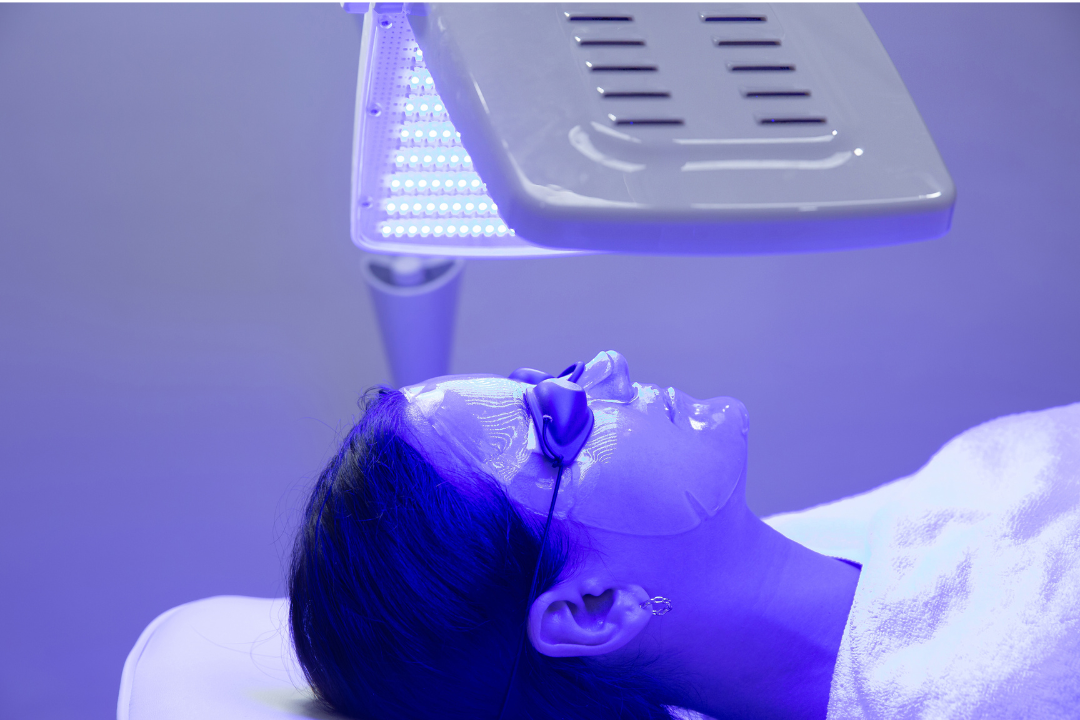
Red Light Therapy: The Science Behind Healthier, Younger-Looking Skin
Skin Health, Rejuvenation & Healthy Ageing
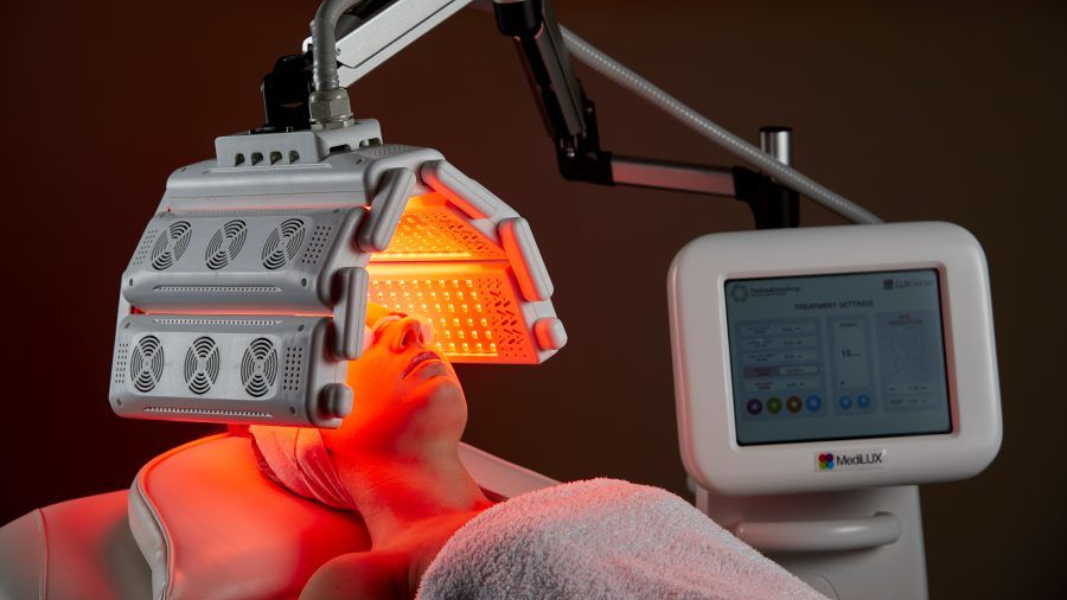
What if just 12 minutes of red light therapy, twice a week, could help support healthier, more youthful-looking skin?
Red light therapy has become increasingly popular in the world of aesthetics, and for good reason. Once primarily associated with wound healing and medical applications, this non-invasive treatment is now gaining attention for its potential to improve skin quality, support collagen production and address some of the visible signs of ageing.
But what makes red light therapy so interesting isn't simply the glow you may notice after a treatment. It's what may be happening beneath the skin's surface, at a cellular level.
And as research into red light therapy continues to grow, we're learning more about how regular, controlled exposure to specific wavelengths of light may support the skin's natural repair processes.
What is red light therapy?
Red light therapy, also known as photobiomodulation (PBM), uses specific wavelengths of red and sometimes near-infrared light to influence cellular activity.
Unlike ultraviolet (UV) light, which can damage skin cells and accelerate premature ageing, red light therapy uses non-ionising wavelengths that do not cause the same type of UV-related skin damage.
Red light therapy commonly uses wavelengths around 630–660 nanometres, while near-infrared treatments often use wavelengths around 810–850 nanometres.
These wavelengths interact with components within our cells, potentially influencing energy metabolism, inflammation and tissue repair.
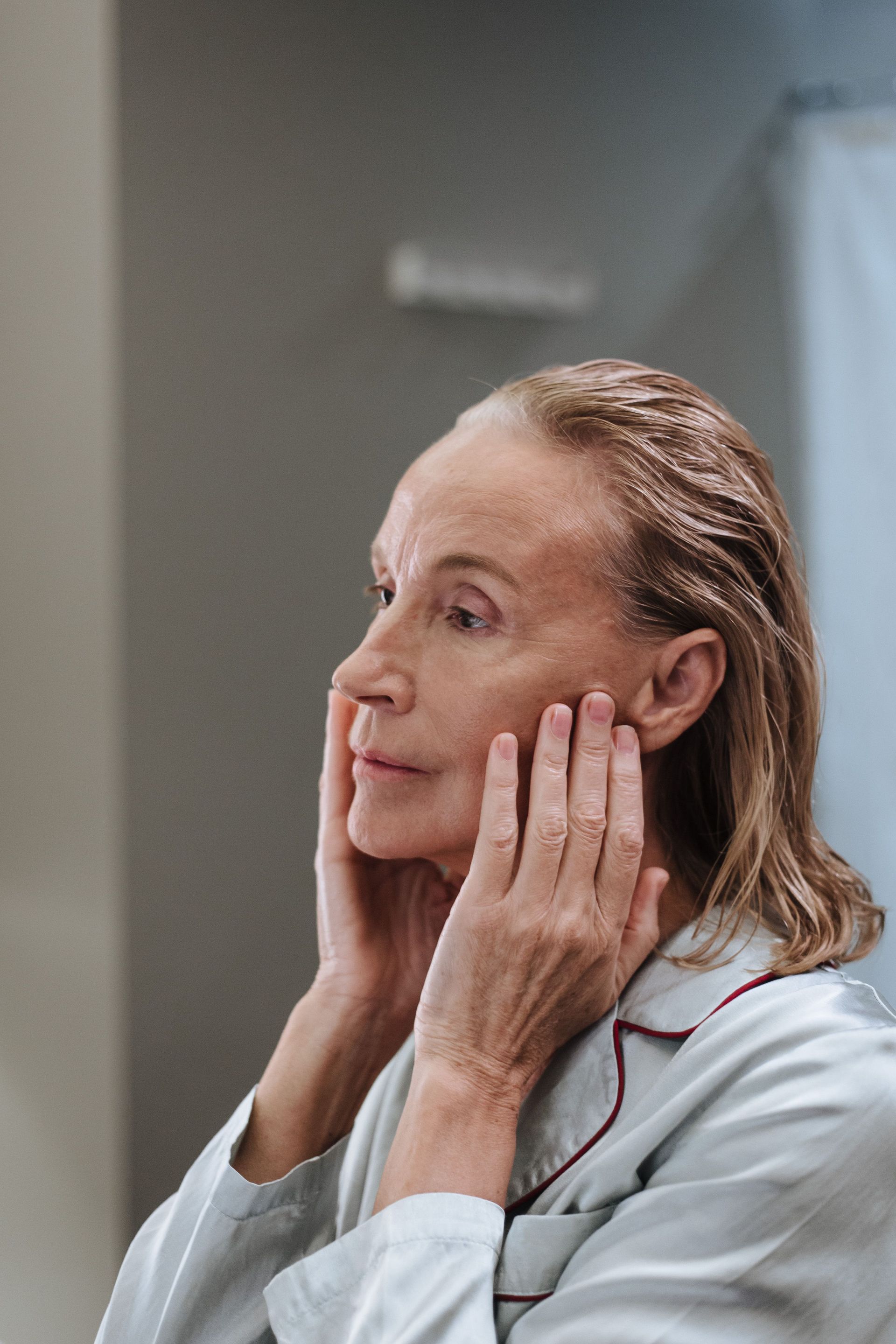
Why does red light therapy benefit ageing skin?
As we age, our skin undergoes several important changes:
- Collagen production and maintenance decline, contributing to fine lines, wrinkles and loss of firmness.
- Elastin fibres deteriorate, reducing the skin's ability to stretch and return to its original shape.
- Hydration decreases, leaving skin feeling drier and looking less plump.
- Skin resilience declines, meaning the skin may become more sensitive and take longer to recover from environmental stressors or aesthetic treatments.
These changes can become particularly noticeable during perimenopause and menopause, when declining oestrogen levels influence collagen maintenance, hydration and skin barrier function.
Red light therapy offers a way to support some of the biological processes involved in maintaining skin health without deliberately creating the tissue injury associated with more intensive resurfacing treatments.
The science: How red light therapy works
One of the most interesting aspects of red light therapy is its potential effect on the mitochondria — the tiny structures inside our cells responsible for producing much of the energy they need to function.
This energy is produced in the form of adenosine triphosphate (ATP).
Research suggests that red and near-infrared light can influence mitochondrial signalling, including pathways involving an enzyme called cytochrome c oxidase.
These interactions may influence ATP production, cellular signalling and the activity of fibroblasts — the cells responsible for producing collagen and other components of the skin's extracellular matrix (ECM).
The ECM is the structural framework that supports our skin, helping maintain firmness, elasticity and overall tissue integrity.
By supporting fibroblast activity and cellular signalling, red light therapy may help encourage healthier skin function over time.
It is important to understand that these effects depend on the wavelength, light intensity, total dose and treatment frequency. More light does not automatically mean better results.
The research: Can 12 minutes twice a week really make a difference?
This is where the science gets exciting!
A 2023 clinical study by Couturaud and colleagues investigated the effects of a red LED facial mask used for just 12 minutes, twice weekly, over three months.
The study involved 20 women aged 45–70 and used red light at approximately 630 nm.
Researchers reported improvements in several visible signs of skin ageing, including wrinkle depth, skin firmness, elasticity and dermal density.
Although these findings are encouraging, the study was small and did not include a placebo control group. This means it provides promising evidence rather than definitive proof that the treatment reverses skin ageing.
More importantly, subsequent research has strengthened the evidence.
A 2025 randomised, double-blind, sham-controlled clinical trial involving 95 women aged 45–60 compared red light therapy twice weekly with three times weekly.
Researchers found improvements in selected wrinkle measurements compared with sham treatment, while twice-weekly sessions produced similar results to three weekly sessions. This study used 21-minute sessions rather than 12-minute sessions.
PubMed
And in October 2026, a systematic review examining eight studies involving 365 participants found that at-home LED photobiomodulation was associated with improvements in wrinkles, skin texture and elasticity, although researchers emphasised the need for larger studies and more consistent treatment protocols.
PubMed+1
The takeaway? Regular red light therapy may improve visible signs of skin ageing, and twice-weekly treatments can be beneficial. However, 12 minutes is not a universally proven treatment dose, because different devices deliver different amounts of light.
The benefits of red light therapy
1. Supports collagen production
Red light therapy may stimulate fibroblast activity and support collagen synthesis, helping improve the appearance of fine lines and skin firmness over time.
2. Improves skin texture and elasticity
Clinical studies have demonstrated improvements in skin smoothness and elasticity, which can contribute to a healthier, more refreshed appearance.
3. Supports cellular repair and recovery
Photobiomodulation may influence inflammatory signalling and cellular repair pathways. This makes it an interesting complementary treatment in skin health and recovery protocols.
4. Supports skin health during menopause
With hormonal changes contributing to reduced collagen, hydration and resilience, red light therapy may provide a gentle addition to a personalised midlife skin treatment plan.
Why consistency matters more than intensity
One of the biggest misconceptions about skin rejuvenation is that more intensive treatments always produce better results.
Red light therapy works differently.
Rather than creating controlled injury to stimulate repair, it aims to influence cellular activity through carefully delivered light energy.
There is also a concept known as the biphasic dose response. This means that an appropriate amount of light may produce beneficial effects, while increasing the dose beyond an optimal range may provide no additional benefit or even reduce the desired response.
That's why treatment duration, frequency and device quality matter.
It is also why the results of a clinical study using a specific LED device cannot automatically be applied to every red light mask or lamp on the market.
Is red light therapy safe?
Red light therapy is generally well tolerated when performed using an appropriate device and treatment protocol.
It is non-invasive, requires no needles and typically involves no downtime.
However, it is important to use suitable eye protection according to the device manufacturer's instructions and to seek professional advice if you have a photosensitivity disorder or take medications that increase light sensitivity.
Red light therapy also does not replace sunscreen, evidence-based skincare or medical assessment of suspicious skin lesions.
Where does red light therapy fit into your skin journey?
At Luxura Skin, we believe healthy skin is about more than simply treating wrinkles.
It's about understanding how your skin changes with age and supporting its long-term health.
Red light therapy can be considered alongside other skin treatments, such as skin needling, bio-regenerative treatments and personalised skincare, depending on your skin's needs.
For some people, the priority may be supporting hydration and skin barrier function. For others, it may be improving skin texture, firmness or the visible signs of ageing.
There is no single treatment that addresses every aspect of skin ageing, which is why an individualised consultation is so important.
The bottom line: Small treatments, meaningful potential
The growing body of research into red light therapy is encouraging.
Studies suggest that regular treatment can help improve certain visible signs of skin ageing, including fine lines, texture and elasticity.
And while the idea of just 12 minutes twice a week is appealing, the real science tells us that consistency, appropriate dosing and the right treatment protocol are what matter most.
Healthy skin isn't built overnight. It's a journey of supporting your skin's changing needs, protecting what you have and choosing treatments that work with your skin's natural biology.
Ready to invest in your skin health?
Book a complimentary skin consultation at Luxura Skin, Ballarat, where we can discuss your skin concerns and develop a personalised treatment plan to support healthy, confident ageing.
Scientific references
- Couturaud et al. (2023). Clinical investigation of red LED photobiomodulation for facial skin ageing using twice-weekly 12-minute treatments.
- Bragato et al. (2025). Role of photobiomodulation application frequency in facial rejuvenation: Randomized, sham-controlled, double-blind, clinical trial. View study
- Efficacy and Safety of At-Home Light-Emitting Diode Photobiomodulation for Facial Rejuvenation: A Systematic Review (2026). View systematic review
- Clinical study to evaluate the efficacy and safety of home-used LED and IRED mask for crow's feet (2025). View clinical trial
Educational information only. Individual results vary. The research describes specific devices and protocols and does not establish that every LED device or treatment schedule will produce the same results.