Facial Asymmetry: Why Perfect Symmetry Isn’t the Secret to a Beautiful Face
Understanding why perfectly symmetrical doesn’t always mean more beautiful — and why facial balance, proportion and harmony matter more.

Have you ever taken a photo, flipped it around or looked closely in the mirror and suddenly noticed that one side of your face looks different from the other?
Perhaps one eyebrow sits higher. One cheek appears fuller. One eye looks slightly larger, the jawline is stronger on one side, or one side of the mouth moves differently when you smile.
The reality is that facial asymmetry is normal.
Almost every human face has some degree of difference between the left and right sides. And while symmetry has traditionally been associated with beauty, modern research suggests that facial attractiveness is far more complex than simply making both halves of the face identical.
In aesthetic medicine, this creates an important distinction:
The goal should not necessarily be perfect symmetry. The goal is facial balance, proportion and harmony.
What Is Facial Asymmetry?
Facial asymmetry simply means that the two sides of the face are not identical.
It can involve differences in:
- eyebrow height
- eye shape or position
- cheek projection or volume
- nose position
- lip shape
- jawline and chin position
- muscle strength and movement
- skeletal structure
- fat distribution
- skin quality and ageing
Some asymmetry is present from childhood because of our underlying anatomy. Other differences become more noticeable as we age.
Genetics, skeletal development, dental alignment, previous injuries, muscle activity, habitual facial expressions and age-related changes can all contribute.
Volume loss also does not necessarily occur identically on both sides of the face. Differences that were relatively subtle when we were younger may therefore become more apparent with time.
Is a Symmetrical Face More Beautiful?
For many years, facial symmetry has been considered one of the biological characteristics associated with attractiveness.
A major review of facial attractiveness research found evidence that symmetry, averageness and sexually dimorphic characteristics can all influence how attractive a face is perceived to be. (PubMed)
However, the story has become much more interesting as facial-attractiveness research has evolved.
More recent research suggests that symmetry may not be nearly as important as we once believed.
A 2019 study examining symmetry, averageness and sexual dimorphism found that increasing facial symmetry produced only a relatively small effect on attractiveness in one experiment and no significant effect in another. Facial averageness — essentially how closely facial proportions resemble the population norm — had a substantially stronger influence. (MDPI)
More recently, a 2025 study published in Scientific Reports found that facial averageness predicted attractiveness in both male and female faces, whereas facial shape symmetry did not independently predict attractiveness. (DOI)
So while symmetry can contribute to facial aesthetics, beauty cannot simply be reduced to symmetry.
Interestingly, Perfect Symmetry Can Look Unnatural
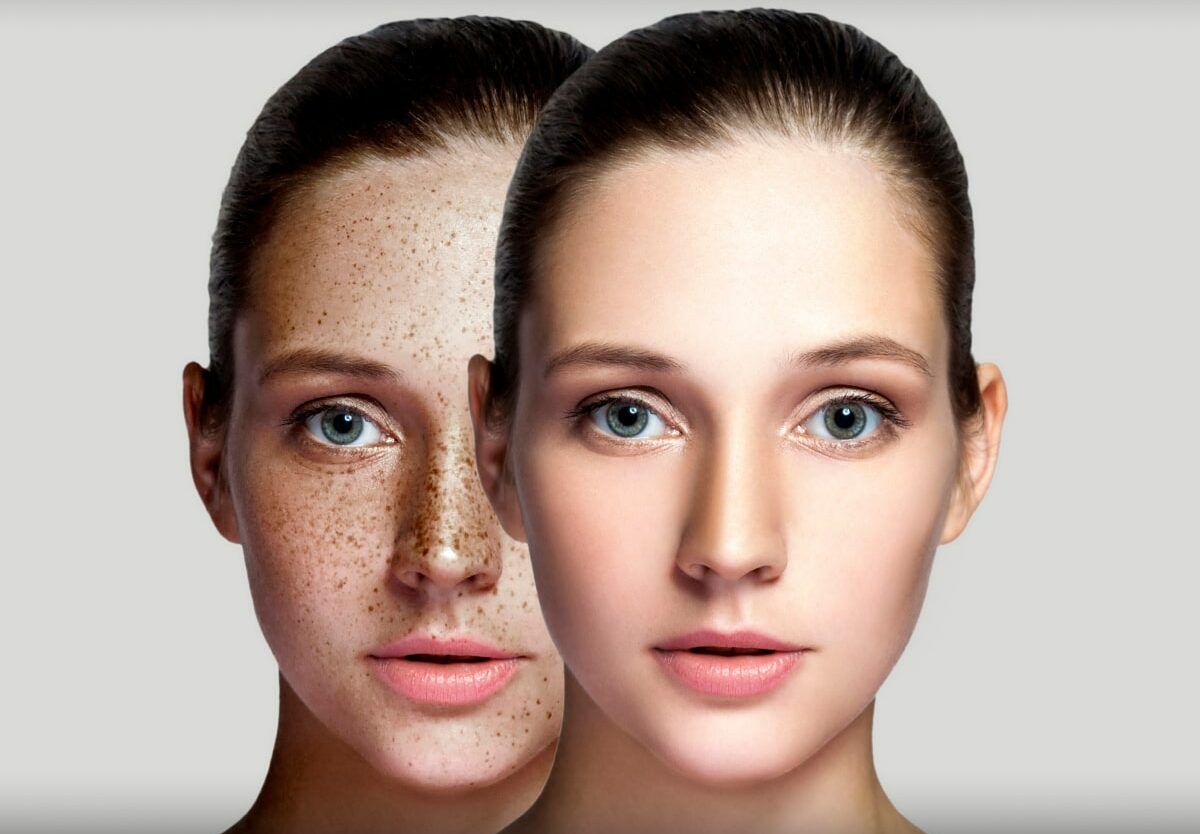
One of the easiest ways to demonstrate this is to take a photograph of someone's face, divide it vertically and mirror one half to create a perfectly symmetrical face.
The result can look surprisingly unfamiliar.
Early facial-attractiveness experiments using this technique sometimes produced contradictory results because mirroring half a face can create unnatural facial proportions and textures. More sophisticated research has subsequently demonstrated that symmetry can positively influence attractiveness — but it remains only one component of a much bigger picture. (PubMed Central (PMC))
Other research has found that symmetry may relate more strongly to the perception of health than to attractiveness itself. (PubMed)
Our tiny differences are part of what makes our faces individual and recognisable.
So What Actually Makes a Face Attractive?
There is no single mathematical formula for beauty.
Research suggests that our perception of attractiveness is influenced by an interaction between characteristics such as:
Facial balance and proportion
How the upper, middle and lower thirds of the face relate to one another can be more aesthetically important than whether the left and right sides are identical.
Averageness
Interestingly, research repeatedly demonstrates an association between facial averageness and attractiveness. This doesn't mean looking "ordinary". Rather, facial features and proportions that do not deviate dramatically from typical human facial proportions tend to be perceived favourably. (PubMed Central (PMC))
Individual features
Distinctive features can actually enhance beauty. A perfectly mathematically average face is not necessarily the most beautiful face.
Skin quality
Colour, texture, luminosity and evenness of the skin influence our perception of the face as a whole.
Facial movement and expression
We don't experience people as photographs. We see faces talking, smiling, laughing and expressing emotion. Dynamic facial movement is therefore an important part of facial attractiveness.
Harmony
Ultimately, attractive faces tend to have features that work well together. A beautiful nose, lip or cheek cannot be assessed completely independently of the rest of the face.
Why Correcting Facial Asymmetry Can Be Challenging
This is where aesthetic treatment becomes particularly interesting.
A client may come into clinic and say:
"This side of my face is smaller. Can you just put more volume into it?"
Sometimes that may form part of an appropriate treatment plan.
But asymmetry isn't always simply a volume problem.
What appears externally as asymmetry may originate from several different anatomical layers.
For example, one side may have:
- different skeletal projection
- different fat distribution
- greater or lesser muscle activity
- different soft-tissue thickness
- different ligament support
- different degrees of age-related volume loss.
There may also be differences in dental structure or the position of the jaw.
Therefore, adding volume to the side that looks smaller does not automatically correct the underlying cause.
In some circumstances, it may simply create a different imbalance.
Your Face Also Moves
This is another reason treating asymmetry requires careful assessment.
A face may appear relatively balanced when relaxed but become noticeably asymmetric when the person smiles, frowns, raises their eyebrows or speaks.
Alternatively, the opposite may occur.
This is the difference between static and dynamic asymmetry.
Muscles on opposite sides of the face don't necessarily contract with exactly the same strength. Where muscle activity contributes to asymmetry, appropriately selected treatments may sometimes be used to modify that activity.
Published guidance regarding botulinum toxin treatment for certain forms of facial asymmetry highlights the importance of a systematic approach involving careful assessment, conservative treatment, precise placement and follow-up rather than simply attempting to make one side replicate the other. (PubMed Central (PMC))
Ageing Isn't Symmetrical Either
Another fascinating aspect of facial ageing is that we don't necessarily age identically on both sides.
Pre-existing differences in bone structure, muscle activity and soft tissue can become increasingly visible as facial volume and structural support change.
Lifestyle and environmental influences may also affect one side differently from the other.
This means that aesthetic treatment should consider how the entire face is ageing, rather than chasing individual lines or measuring one side against the other.
The Trap of Trying to Achieve Perfect Symmetry
One of the biggest challenges in aesthetic medicine is knowing when not to correct something.
If we repeatedly treat every tiny difference between the two sides of a face, we risk over-treating the patient.
Correct one difference and another may suddenly become more noticeable.
Add volume to one cheek and the jaw may appear different.
Alter one eyebrow and the eyes may suddenly appear less balanced.
Change the lips and their relationship with the chin and lower face changes.
The face is three-dimensional and interconnected.
This is why aesthetic treatment should never become a pursuit of mathematical perfection.
Balance, Not Perfection
At Luxura Skin, facial assessment isn't about finding everything that's "wrong" with someone's face.
It's about understanding the individual's anatomy, proportions, movement, skin and ageing pattern and determining whether treatment could create a more harmonious overall appearance.
Sometimes improving an obvious asymmetry can make a beautiful difference.
Sometimes the most appropriate decision is to make a subtle improvement rather than attempting complete correction.
And sometimes an asymmetry simply doesn't need correcting at all.
A naturally beautiful face doesn't need two identical halves.
Research increasingly supports what experienced aesthetic practitioners see clinically: symmetry can influence how we perceive faces, but it is only one element of attractiveness. Facial averageness, proportions, distinctive features, skin quality, movement and overall harmony all contribute to how a face is perceived. (MDPI)
The aim of thoughtful aesthetic treatment should therefore be to respect individuality while improving balance — not to manufacture perfect symmetry.
Individual facial anatomy and treatment suitability vary. A consultation and clinical assessment are required before determining whether any aesthetic treatment is appropriate.