Ageing Skin & Menopause: 4 Changes You Need to Know About
Discover how ageing and menopause affect collagen, elastin, hydration and skin resilience

Understanding collagen, elastin, hydration and resilience — and why your skin needs a different approach as you get older.
Have you ever looked in the mirror and wondered why your skin suddenly seems different? Perhaps it's feeling drier than usual, your favourite skincare products aren't delivering the same results, or you've noticed increased sensitivity, fine lines or a loss of firmness.
You're certainly not alone!
As we age, our skin undergoes a number of biological changes that affect not only how it looks but also how it functions, protects itself and repairs.
For women, these changes can become particularly noticeable during perimenopause and menopause, when declining oestrogen levels influence collagen production, hydration, skin thickness and the skin's ability to recover.
While wrinkles and sagging are often the most talked-about signs of ageing, there's actually much more happening beneath the surface.
Let's explore four key changes that occur in ageing skin and, more importantly, what we can do to support healthier skin as we get older.
1. Decreased Collagen – Losing Our Skin's Structural Support
Collagen is one of the most important structural proteins in our skin. Think of it as the scaffolding that provides strength, firmness and support.
When we're younger, our skin is continually producing and remodelling collagen, helping maintain that firm, plump appearance.
However, as we age, collagen production gradually declines, and the existing collagen fibres can become fragmented and less organised.
For women, menopause can accelerate this process. Research suggests that skin collagen content may decrease by approximately 30% during the first five years after menopause, although the rate varies between individuals.
What might you notice?
- Fine lines becoming more noticeable
- Deeper wrinkles developing
- Loss of firmness around the cheeks and jawline
- Skin appearing thinner or less plump
- Changes in skin texture
What can we do?
Supporting collagen involves more than simply stimulating the skin.
Daily sun protection, appropriate skincare ingredients such as retinoids and vitamin C, adequate dietary protein and an individualised treatment plan can all play a role.
Professional treatments such as skin needling, radiofrequency-based treatments and selected regenerative approaches may also be considered, depending on your skin's condition and treatment goals.
Importantly, we need to consider the health of the tissue before introducing treatments designed to stimulate collagen.
2. Decreased Elastin – When Skin Loses Its Bounce
Have you ever gently pinched the skin on the back of your hand and noticed that it doesn't bounce back quite as quickly as it once did?
That's partly related to changes in elasticity.
Elastin is another important structural protein that allows our skin to stretch and return to its original shape.
Unlike collagen, our skin has a very limited ability to replace mature elastin fibres once they become damaged.
Over time, ageing and cumulative sun exposure can alter the skin's elastic fibre network, contributing to reduced elasticity and sagging.
What might you notice?
- Skin that feels less firm or springy
- Sagging around the jawline and lower face
- Fine, crepey skin, particularly around the eyes and neck
- Skin that doesn't bounce back as readily
What can we do?
Although we cannot simply replace lost elastin with a cream or treatment, we can support the surrounding skin structures and help protect existing fibres.
Consistent SPF protection is particularly important because UV exposure accelerates collagen and elastin damage.
Skincare that supports collagen production, skin hydration and barrier health can improve the overall appearance and quality of the skin.
Selected professional treatments may also help improve firmness and texture, although results depend on the degree of skin laxity and individual skin characteristics.
3. Decreased Hydration – Why Your Skin Suddenly Feels Drier
One of the most common complaints I hear from women in their 40s, 50s and beyond is:
"My skin has become so dry! I've never had dry skin before."
And there's a biological reason for this.
As we age, changes occur in the skin's natural moisturising factors, lipid composition and ability to retain water.
During menopause, declining oestrogen can contribute to reduced skin hydration and changes in the skin barrier.
Hyaluronic acid, a naturally occurring molecule that helps bind water within the skin, also changes with age.
The result? Skin that may feel less supple, less comfortable and more prone to dryness.
What might you notice?
- Tightness, particularly after cleansing
- Dry, flaky or rough skin
- Fine dehydration lines
- Dullness and reduced radiance
- Makeup settling into fine lines
- Your usual moisturiser no longer feeling sufficient
What can we do?
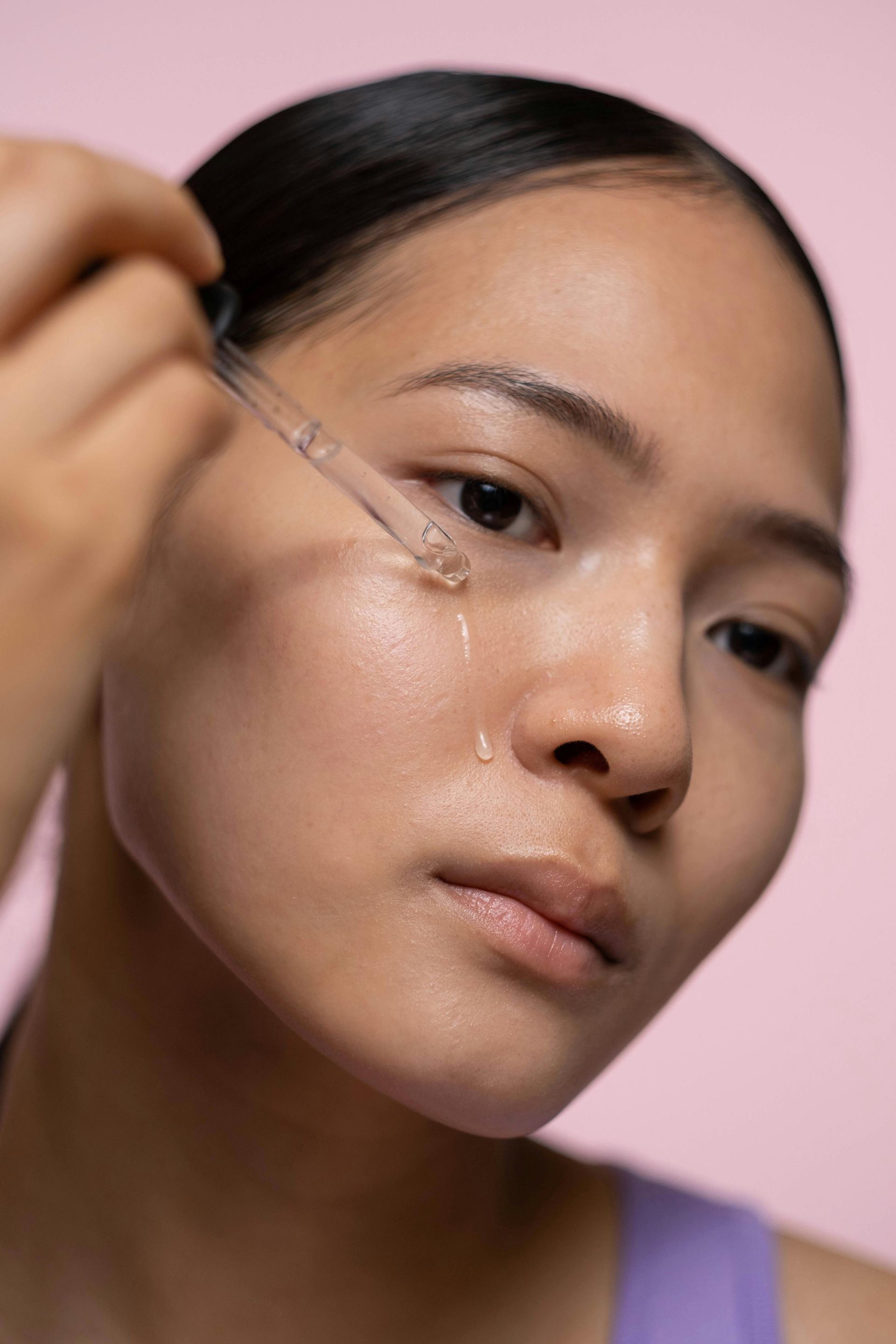
This is where choosing the right skincare becomes incredibly important.
Look for ingredients that support both hydration and the skin barrier, including:
- Hyaluronic acid: Helps attract and retain water within the outer layers of the skin.
- Ceramides: Support the skin's protective barrier and reduce moisture loss.
- Glycerin: A humectant that helps draw moisture into the skin.
- Niacinamide: Supports barrier function and can improve uneven skin tone.
- Panthenol: Helps soothe and support dry, sensitive skin.
It's also important to understand that hydration and moisturisation are not quite the same thing.
Hydrating ingredients help increase water content in the skin, while moisturising ingredients help reduce water loss and support the protective barrier.
A good skincare routine often needs both.
And remember, more products don't necessarily mean better results. Sometimes a simpler, well-formulated routine is exactly what ageing skin needs.
4. Decreased Resilience – The Change We Often Overlook
This is probably one of the most important changes in ageing skin, yet it's rarely discussed.
Resilience refers to your skin's ability to tolerate everyday stress, maintain its protective barrier and recover from irritation, injury and treatments.
As we age, several biological processes involved in skin repair become less efficient.
Cell turnover can slow, inflammatory responses may become altered, and the skin's ability to restore its barrier after disruption can be reduced.
Changes in the extracellular matrix — the supportive environment surrounding our skin cells — also influence how effectively the skin maintains its structure and responds to damage.
During menopause, hormonal changes can further affect these processes.
And this is where things can become particularly frustrating.
When Your Favourite Skincare Suddenly Stops Working
Have you ever used the same skincare products for years, only to suddenly find that they're irritating your skin?
Perhaps your vitamin C serum now stings, your retinol causes more redness than it used to, or even your everyday moisturiser feels uncomfortable.
Or maybe you're using all the same products, but your skin simply doesn't look as healthy as it once did.
Your skincare hasn't necessarily changed — your skin has!
As your skin becomes drier and potentially more vulnerable, ingredients that were previously well tolerated may start causing irritation.
You might notice:
- Stinging or burning when applying skincare
- Increased redness or sensitivity
- Dryness and flaking after using active ingredients
- Skin taking longer to settle after treatments
- Increased sensitivity to environmental changes
- Your usual skincare routine no longer meeting your skin's needs
These symptoms shouldn't simply be dismissed as normal ageing. They can indicate a compromised skin barrier, irritation, contact dermatitis or another skin condition that needs assessment.
Why Repair and Recovery Matter
In aesthetic medicine, we've traditionally focused heavily on stimulating the skin — encouraging collagen production, increasing cellular turnover and promoting tissue remodelling.
And these treatments can be very effective.
However, as our skin changes with age, we also need to consider its capacity to recover.
If we continually introduce strong active ingredients, exfoliation or intensive treatments without allowing adequate recovery, we may place unnecessary stress on the skin.
This is why I believe that supporting skin health and recovery should be an essential part of any long-term aesthetic treatment plan.
Sometimes the best approach isn't to do more.
It's to give the skin what it needs to function better.
This may mean temporarily reducing active skincare ingredients, introducing barrier-supporting products, allowing longer recovery periods between treatments or considering treatments that focus on hydration and skin quality.
Why Your Skincare Routine Needs to Evolve With Your Skin
One of the biggest misconceptions about skincare is that once you've found a routine that works, you should stick with it forever.
But our skin isn't static.
It changes with age, hormones, seasons, environmental exposure, medications and overall health.
The products that worked beautifully in your 30s may not be the products your skin needs in your 50s.
For example, someone who previously had oily, resilient skin may begin experiencing dryness and sensitivity during menopause.
Continuing with strong exfoliating acids, aggressive cleansing products or frequent retinoid use may worsen irritation rather than improve their skin.
This doesn't mean that active ingredients are no longer beneficial. It simply means that their concentration, frequency and formulation may need adjusting.
The goal is to create a skincare routine that works with your skin, not against it.
A well-designed routine should focus on protecting the skin from UV damage, maintaining hydration, supporting the skin barrier and addressing individual concerns such as pigmentation, fine lines, texture or loss of firmness.
The Importance of a Professional Skin Consultation
One of the most valuable things you can do when you begin noticing changes in your skin is to have a professional skin consultation.
Why?
Because what you see on the surface doesn't always tell us the whole story.
Dryness, redness, pigmentation, fine lines and sensitivity can have several contributing factors, and not every concern should be approached with the same treatment.
At Luxura Skin, a consultation is an opportunity to look beyond the visible signs of ageing and understand what's happening with your skin.
We can discuss your current concerns, hormonal changes, medical history, lifestyle factors, existing skincare products and previous treatments.
We also assess your skin's hydration, barrier condition, sensitivity, pigmentation and overall quality.
This helps us determine whether your skin would benefit from barrier repair and hydration first, a change in skincare, or whether it is appropriate to consider more advanced treatments.
For some clients, the priority may be improving hydration and calming sensitivity.
For others, it may involve introducing collagen-stimulating treatments or addressing pigmentation and textural changes.
And for many, it's a combination of approaches introduced gradually over time.
There is no one-size-fits-all solution to ageing skin.
A consultation allows us to create a personalised plan that considers not only what you want to improve, but what your skin actually needs.
Persistent or unexplained irritation, new skin lesions or significant changes may also require assessment by your GP or dermatologist before commencing cosmetic treatments.
It's Not About Fighting Ageing – It's About Supporting Healthy Skin
Ageing is a natural process, and our skin will continue to change throughout our lives.
But understanding these changes allows us to make better decisions about how we care for it.
Collagen provides structure. Elastin supports elasticity. Hydration maintains comfort and suppleness. And resilience helps our skin protect and repair itself.
All four are interconnected.
At Luxura Skin, my philosophy is that healthy skin should always be the foundation of aesthetic treatments.
Rather than focusing solely on wrinkles or individual signs of ageing, I believe in taking a more holistic, long-term approach that considers skin quality, barrier function, hydration and tissue health.
Because improving your skin isn't always about doing more treatments or using stronger products.
Sometimes it's about understanding your skin, making the right changes and giving it the support it needs.
Your skin is changing. Your skincare and treatment plan should evolve with it.
Ready to Understand What Your Skin Needs?
If you've noticed changes in your skin, particularly during perimenopause or menopause, a personalised skin consultation is a great place to start.
At Luxura Skin in Ballarat, we can discuss your concerns, review your current skincare and explore appropriate options to support your skin's health and appearance.
Book your skin consultation with Luxura Skin and let's create a plan that works for your skin, at every stage of life.
All aesthetic treatments require an individual consultation to assess suitability, potential risks, benefits and expected outcomes. Results vary between individuals.